AI Writing for SEO: Strategy, Tools & Workflow (2026)
%20(1).png)
Every SEO team writes with AI now. But the teams pulling ahead in 2026 aren’t the ones using AI to write faster. They’re the ones using it without letting Google notice.
That distinction matters more than it used to. Search engines have gotten sharper at spotting shallow, templated AI output, and the same content is now competing for space in AI Overviews, ChatGPT answers, and Perplexity citations, not just the blue links. Writing with AI for SEO in 2026 means understanding where the tool helps, where it hurts, and how to build a workflow that survives both a Google update and an AI model swap.
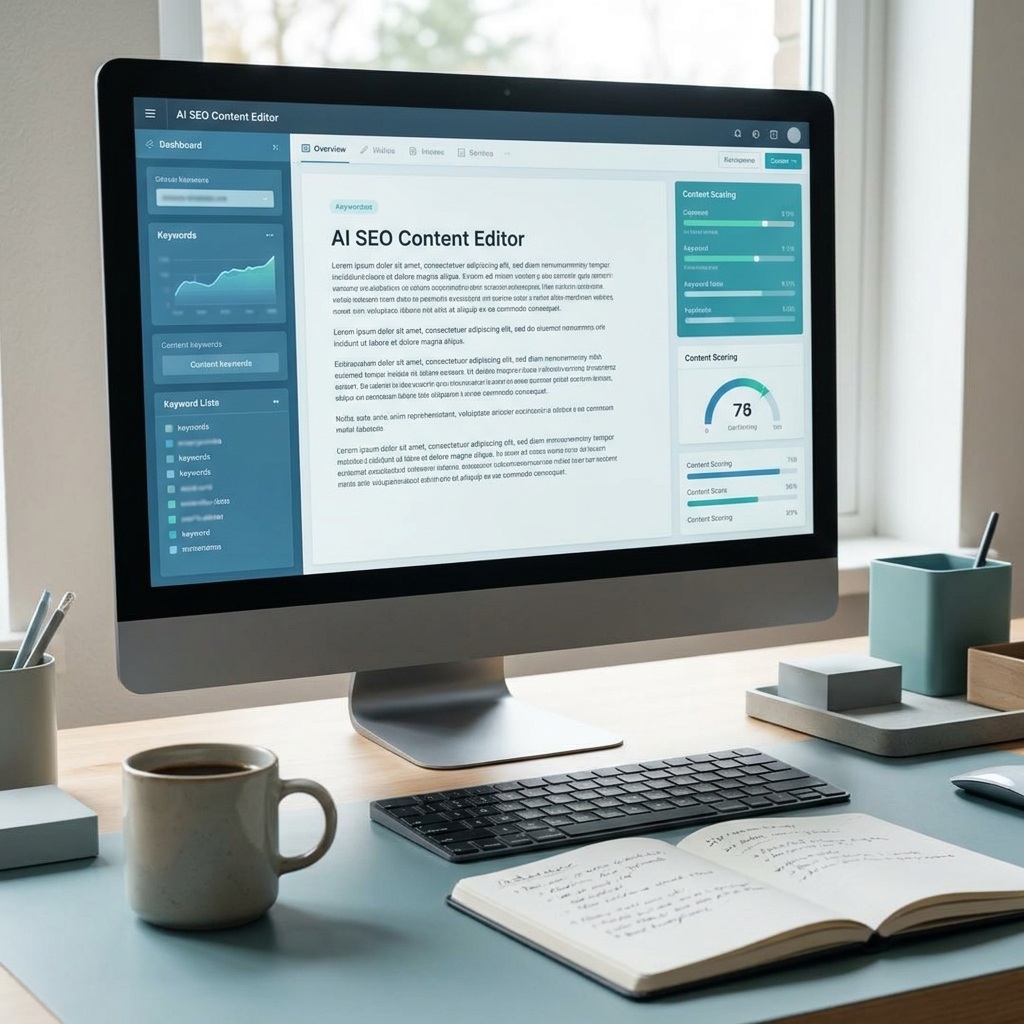
The SEO Paradox: AI Writing Gets Easier, Rankings Get Harder
Here’s the paradox nobody likes to say out loud: the easier AI makes it to publish content, the harder it gets to rank.
When every competitor can generate a 2,000-word article on any keyword in minutes, “we published content” stops being a differentiator. Google’s Helpful Content system and its ongoing core updates were built specifically to catch content that reads like it exists to rank rather than to help someone. Generic AI output, thin on specifics, heavy on filler phrasing, is exactly what those systems are tuned to demote.
The practical shift: use AI to match the baseline quality bar your competitors have already reached, then rely on human expertise, original data, and a distinct point of view to actually win the position.
When AI Writing Actually Helps SEO
AI writing tools aren’t the problem, rather using them as a replacement for editorial judgment is. Used well, AI genuinely moves the needle in a few specific spots:
Content velocity. Teams that published 20 articles a year can realistically manage 80–100 with AI handling first drafts, research synthesis, and repetitive sections like FAQs or tool comparisons. That’s the single biggest unlock, more coverage of your keyword universe, faster.
Testing at scale. Headlines, meta descriptions, and intro hooks can be generated in a dozen variations in minutes, letting you A/B test what actually earns clicks instead of guessing.
Internal linking and contextual relevance. AI is good at scanning a large content library and suggesting where a new article should link, or flagging orphaned pages that need more internal support.
SEO-aware drafting. Tools like Creaitor build SERP analysis and content scoring directly into the writing process, so you’re optimizing for search intent while drafting instead of retrofitting keywords afterward.
Where AI writing offers less help: high-stakes topics (medical, financial, legal), and anything that depends on genuine first-hand expertise. If the value of the content comes from “we actually did this and here’s what happened,” AI can help you write it up, but it can’t generate the experience itself. That’s also exactly the kind of content search engines and AI answer engines reward most under E-E-A-T.
AI Writing Tools for SEO: Which Tool for Which Job
There’s no single AI tool that owns the whole SEO writing workflow, each one is better at a different stage. Rather than listing every feature, here’s how they actually differ in practice, plus the trade-off worth knowing before you commit budget.
Creaitor
Creaitor is built specifically for the SEO writing loop. It pulls SERP data before you draft, scores content against ranking competitors, and adds GEO-focused optimization so the same piece is built to be citable by AI answer engines too. For teams publishing regularly, that means less back-and-forth between “write” and “optimize” as separate steps.
- Pro: SERP-informed drafting, built-in SEO scoring, GEO optimization in the same workflow, plans start at $19/month.
- Con: Less useful if you only need occasional short-form copy rather than an ongoing SEO content pipeline.
Jasper
Jasper targets marketing teams that need consistent brand voice across a content calendar, at $39–$59/month depending on billing.
- Pro: Strong brand voice controls, good for teams producing high volume across channels.
- Con: SEO features are lighter than dedicated SEO-writing tools; often paired with a separate SEO platform.
Perplexity
Perplexity is the research layer, not the writer. It’s built for pulling current facts with citations, which matters because AI models trained on stale data will confidently write outdated pricing or specs into your draft if you skip this step.
- Pro: Fast, cited, catches recent changes competitors’ older articles miss.
- Con: Not built for long-form drafting, you still need a separate writing tool.
ChatGPT
ChatGPT and Claude are the general-purpose drafting engines most teams already have access to. They’re flexible for outlines, first drafts, and rewriting in a specific tone.
- Pro: Strong reasoning, good at following detailed style instructions, widely available.
- Con: No built-in SEO scoring or SERP awareness, you’re optimizing manually after the fact.
LanguageTool and Grammarly
LanguageTool and Grammarly round out the workflow at the editing stage, catching grammar, tone, and readability issues AI drafts still produce. Grammarly’s paid tier runs from roughly $12/month (annual) and up.
- Pro: Fast final-pass editing, catches AI phrasing tics before publish.
- Con: Doesn’t address SEO structure or factual accuracy, purely a language layer.
The mistake most teams make: picking one tool and expecting it to cover research, drafting, SEO, and editing all at once. It won’t. The workflow below is how these pieces actually fit together.
The Real Workflow: AI + Human, Step by Step
This is the sequence that consistently produces content that ranks:
- Research. Pull current facts, competitor angles, and SERP structure before writing anything. Creaitor or a direct SERP check works here; skipping this step is the single most common reason AI drafts contain outdated claims.
- Outline. Build the H2/H3 structure around what’s actually ranking and what searchers are asking, not around what the AI model thinks a “typical article” looks like. A generic AI-generated outline is a strong sign no one checked the SERP first.
- Draft with SEO built in. This is where a tool like Creaitor earns its place, drafting against real SERP data and content scoring instead of writing blind and optimizing later. It cuts a full editing pass out of the process.
- Human edit for voice, claims, and links. Every AI-assisted draft needs a human pass that checks for accurate pricing and specs, a distinct voice instead of generic AI phrasing, and internal links to relevant existing content.
- Optimize and ship. Final headers, meta description, CTAs, and a last check that nothing reads like it was written to satisfy a keyword rather than a reader.
Skipping steps 1 or 4 is where most AI-assisted SEO content fails, either the facts are wrong, or the piece reads exactly like every other AI-generated article on the same topic.
SEO Best Practices When Writing with AI
A few rules keep AI-assisted content from becoming a liability instead of an asset:
- Never skip human review. Helpful Content signals specifically target content that lacks a clear point of view or lived experience. A human pass is what adds that.
- Verify every price, spec, and statistic. AI models are frequently trained on data that’s already outdated by the time you publish. Tool pricing especially changes often, check the source directly rather than trusting the model’s memory.
- Link to authoritative sources. If a statistic sounds impressive but has no clear origin, cut it or find the actual source.
- Test before scaling. Publish a handful of AI-assisted articles, watch how they perform, then scale the workflow, don’t commit to 100 articles before confirming the approach actually ranks.
- Watch for AI-specific quality signals. Repetitive sentence structures, vague transitions, and overly balanced “on one hand, on the other hand” framing are common AI tells that both readers and quality-detection systems pick up on.
The Future: AI Writing, GEO, and Content Strategy
The next shift is already underway: writing for search engines and writing for AI answer engines are converging into one job. This is what Generative Engine Optimization (GEO) is about—optimizing not just for traditional search rankings, but for being cited inside AI-generated answers on platforms like ChatGPT and Perplexity. GEO changes what “good AI-assisted content” even means, since it’s no longer just about ranking for a keyword, but about being the source an AI assistant chooses to cite when someone asks a related question.
That means citation-worthy structure (clear claims, specific data, a defined point of view) matters as much as keyword placement now. It also means the tools worth investing in are the ones built for both goals at once. That’s the direction Creaitor has been building toward: SEO scoring and GEO optimization in the same drafting workflow, rather than treating AI visibility as a separate project bolted on afterward.
For teams still treating AI writing purely as a speed play, combining SEO and GEO strategy is where the competitive edge goes next. If you’re ready to go deeper, explore the complete guide to AI for SEO and learn how AEO (Answer Engine Optimization) fits into your broader strategy. Speed got you into the game. Structure, verified facts, and citation-worthy content are what keep you in it.
Frequently Asked Questions (FAQs)
Does using AI to write content hurt my SEO rankings?
Not inherently. Google has stated repeatedly that it doesn’t penalize content for being AI-generated, it penalizes content that’s low-quality, regardless of how it was produced. The risk is publishing generic, unedited AI output at scale.
How much editing does AI-written content actually need?
Plan on a full human pass for every piece: fact-checking claims and pricing, adjusting for brand voice, adding internal links, and cutting generic phrasing. Treat the AI draft as a strong first pass, not a finished article.
Can AI writing tools help with technical SEO too?
Most AI writing tools focus on content and on-page elements (headers, meta descriptions, keyword coverage) rather than technical SEO like site speed or crawlability. Tools like Creaitor add SERP-based content scoring, but technical SEO audits still need a dedicated tool or a technical SEO specialist.
What’s the difference between AI writing for SEO and AI writing for GEO?
SEO writing optimizes to rank in traditional search results. GEO optimizes for being cited inside AI-generated answers on platforms like ChatGPT and Perplexity. In 2026, the strongest content strategies build for both at once rather than treating them as separate workflows.
Is it worth using a dedicated AI writing tool instead of ChatGPT for SEO content?
It depends on volume and goals. For occasional content, ChatGPT or Claude plus manual SEO optimization works fine. For teams publishing regularly and tracking rankings, a dedicated tool built around SERP data and content scoring—like the best AI writing tools for SEO we’ve reviewed—removes a manual optimization step from every article.
Bottom Line
AI can draft faster than any human writer, but speed alone doesn't rank content, structure, verified facts, and a clear point of view do. The winning workflow isn't AI or human, it's AI for research and drafting, human for accuracy and voice, and a tool built around real SERP data to tie SEO and GEO together instead of treating them as separate jobs.
Ready to put that workflow to work? Try Creaitor free and start drafting content that's built to rank from the first sentence.
Blogs that you may also like

GEO Tools Compared: 5 Platforms for AI Search in 2026

LLM SEO: How to Optimize Content for Large Language Models